Sölvesborg Municipality has responded to numerous questions regarding the filling of an opening in the pier at Hällevik Harbour. The background is that the harbour, originally built in 1916, previously received an extra opening to facilitate access for smaller sailing fishing boats. On 16 November, the harbour serves as a leisure boat harbour, and the municipality assesses that the opening is no longer needed. However, the opening has allowed waves to pass through during south-easterly winds, causing damage to boats and equipment, an issue that a floating wave breaker over the last 15 years failed to resolve.
In consultation with consultants, the Hällevik Harbour Association, and contractors, the municipality chose to fill the opening between the existing pier arms. This option was selected as it best meets technical requirements while keeping environmental impact low. Other alternatives, such as new floating wave breakers or a new pier arm, were deemed unsustainable or would have caused greater environmental impact. To carry out the work, a valve bridge built in 2002 was removed as it required repairs.
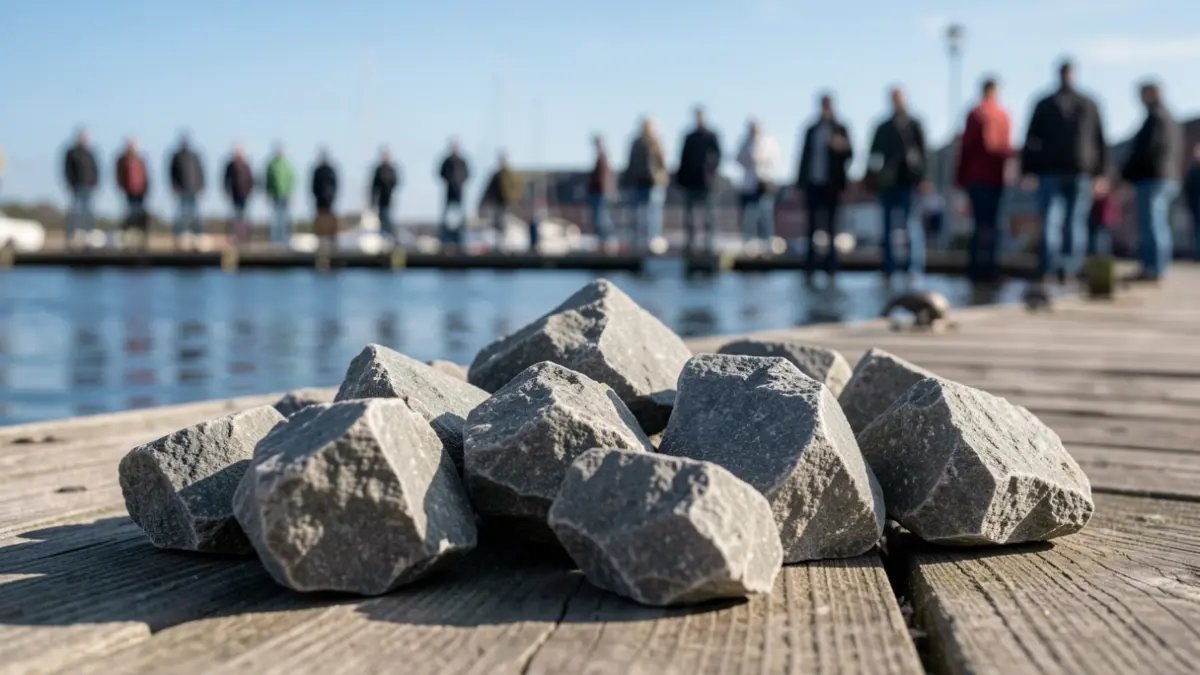
The material used consists of virgin, washed crushed rock in the 100–300 mm fraction. According to the municipality, the proportion of finer particles is so small that it is not measurable after sieving, contradicting claims that the harbour basin would be filled with stone flour. To ensure water exchange, which is driven by high and low tides, three pipes with a diameter of 600 mm have been installed in the structure. The primary opening in the harbour remains 45 metres wide.
The County Board conducted two site visits, on 5 March and 21 April 2026, to check for any environmental impact. No negative environmental impact could be identified during these inspections. The municipality has also submitted a self-control programme where the Hällevik Harbour Association is responsible for daily visual inspections and documentation of selected parameters. The harbour is certified with the Blue Flag, which the municipality highlights as proof of active environmental work.